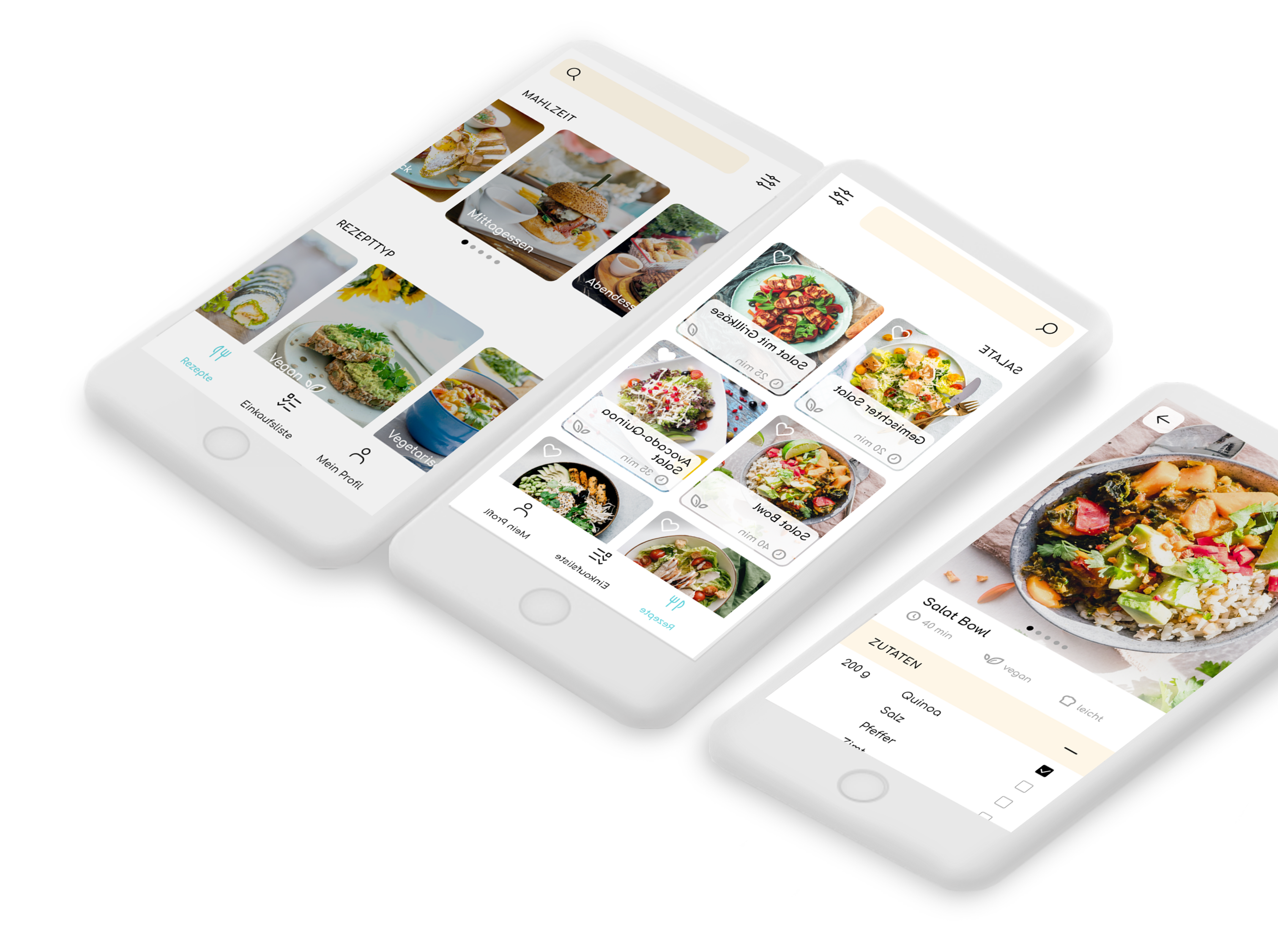
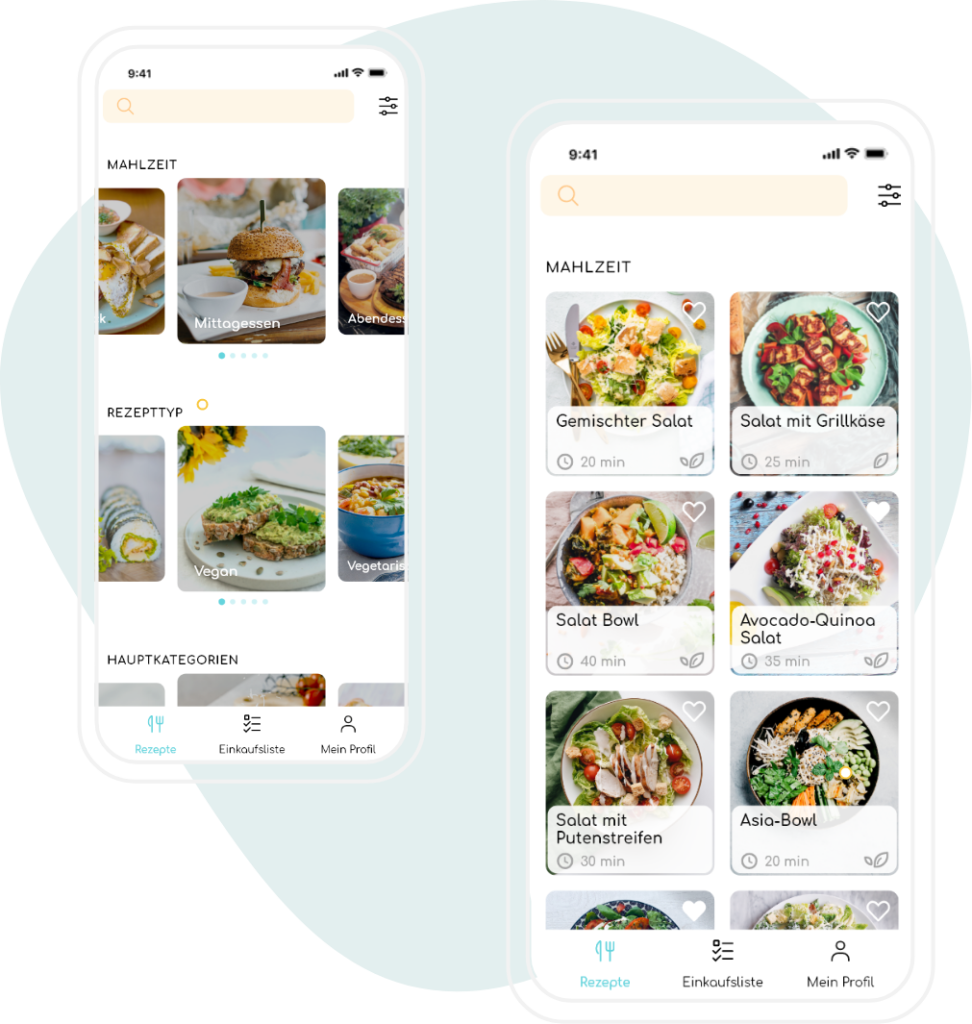
Aim: The goal is to design an app that will be an integral part of everyday life.
But how do you create habits? How can you have a solution for every need that convinces the user and that he learns to love? What service must be offered so that the user perceives the cooking app as his personal key to success and builds an emotional bond with?
ux/ui concept
Cooking app in everyday life
Aim: The goal is to design an app that will be an integral part of everyday life.
But how do you create habits? How can you have a solution for every need that convinces the user and that he learns to love? What service must be offered so that the user perceives the cooking app as his personal key to success and builds an emotional bond with?
The assumption is: The user will call up the app for different motivations. Are they looking for breakfast inspiration or a recipe for lunch? Maybe food needs to be used up or someone is coming to visit and a big meal is planned?
"Guaranteed to succeed"
The service is intended to be supporting to ensure a satisfactory result and thereby increase the use of the app.
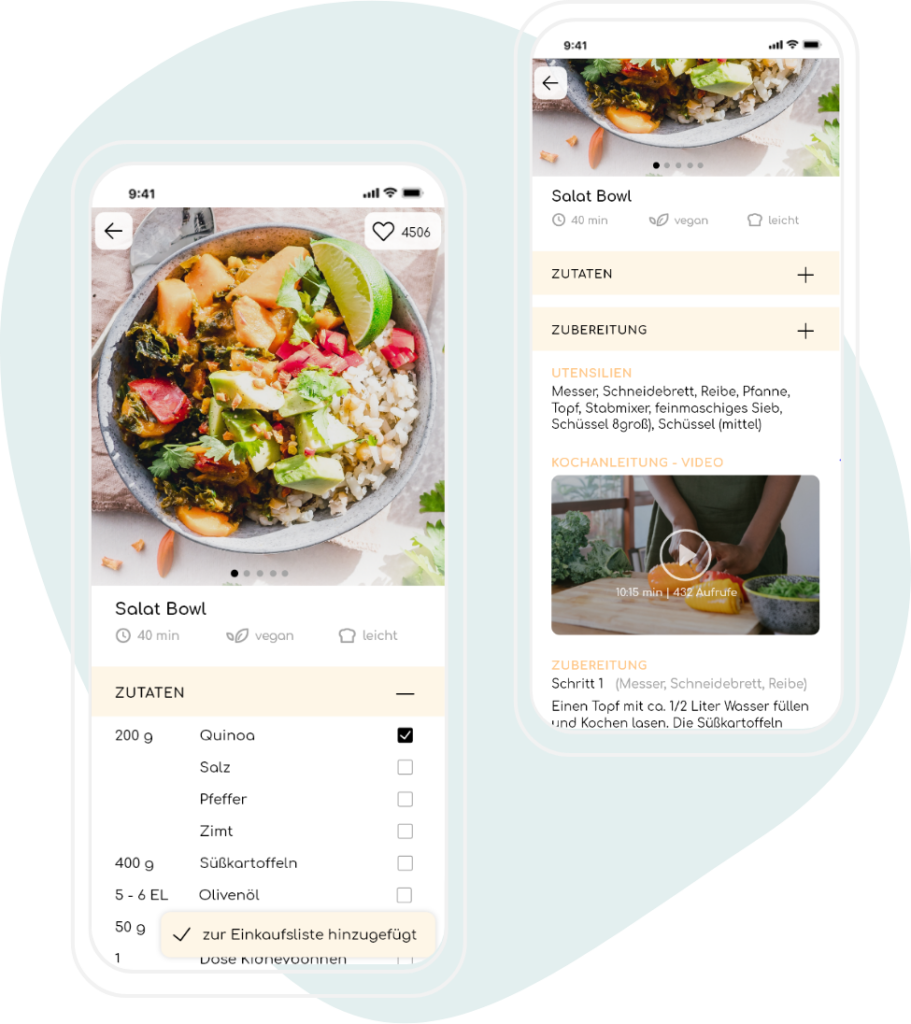
For a recipe to succeed, first of all all the ingredients must be available. Therefore, this app has a shopping list. Tutorials, step-by-step instructions and a detailed list of all the necessary utensils also support the preparation.
The guiding principle behind
The Design of everyday things - DON NORMAN
„Blame it on design, not the people.“
The quote by Don Norman from "The Design of Everyday Things" has been deeply anchored in my memory since my first involvement with design and has accompanied me in my everyday work ever since.
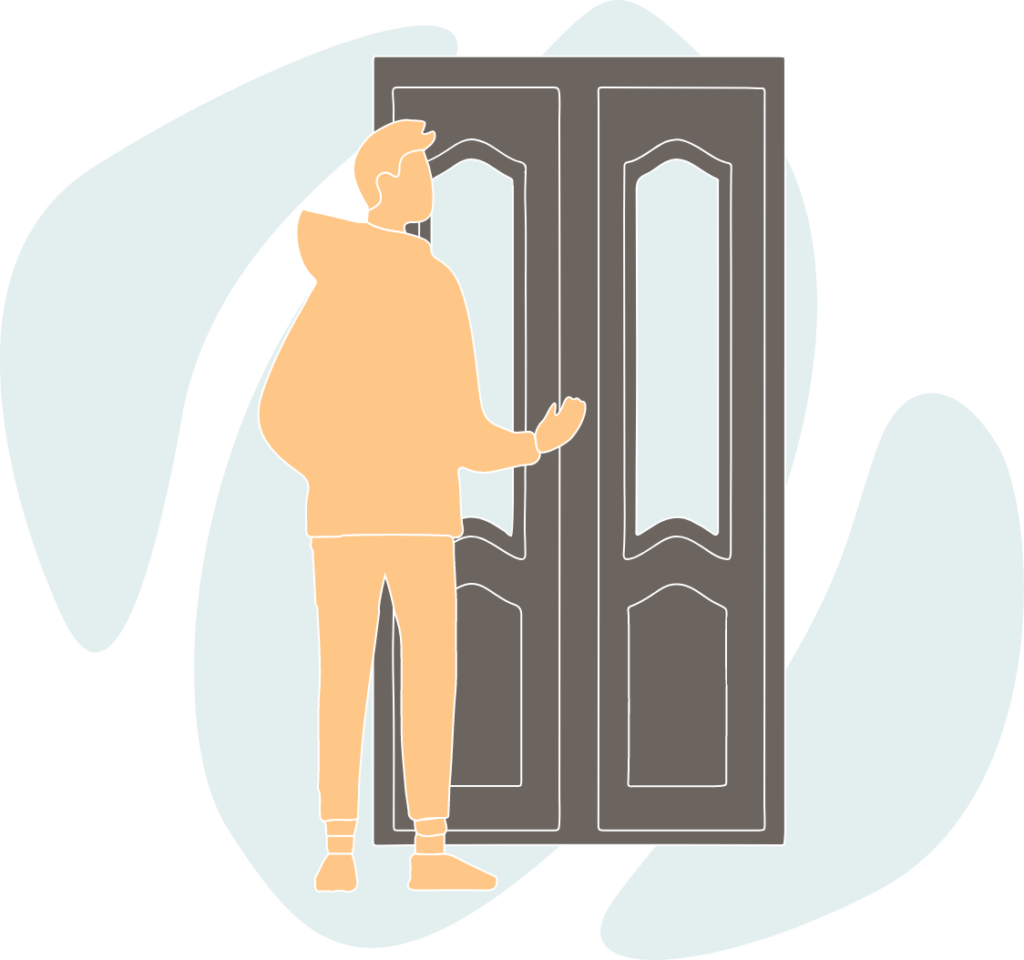
Probably the most typical challenge in everyday life for each of us is to open a door. If you push or pull incorrectly in the process, you feel ashamed, even though it's not the user's fault but an ambiguous design.
The challenge of designing interactions fills me with great respect, as we designer can decide whether the user has a positive experience or experiences a sense of failure. Therefore, my goal is to support users as much as possible in their everyday tasks.
Work insights
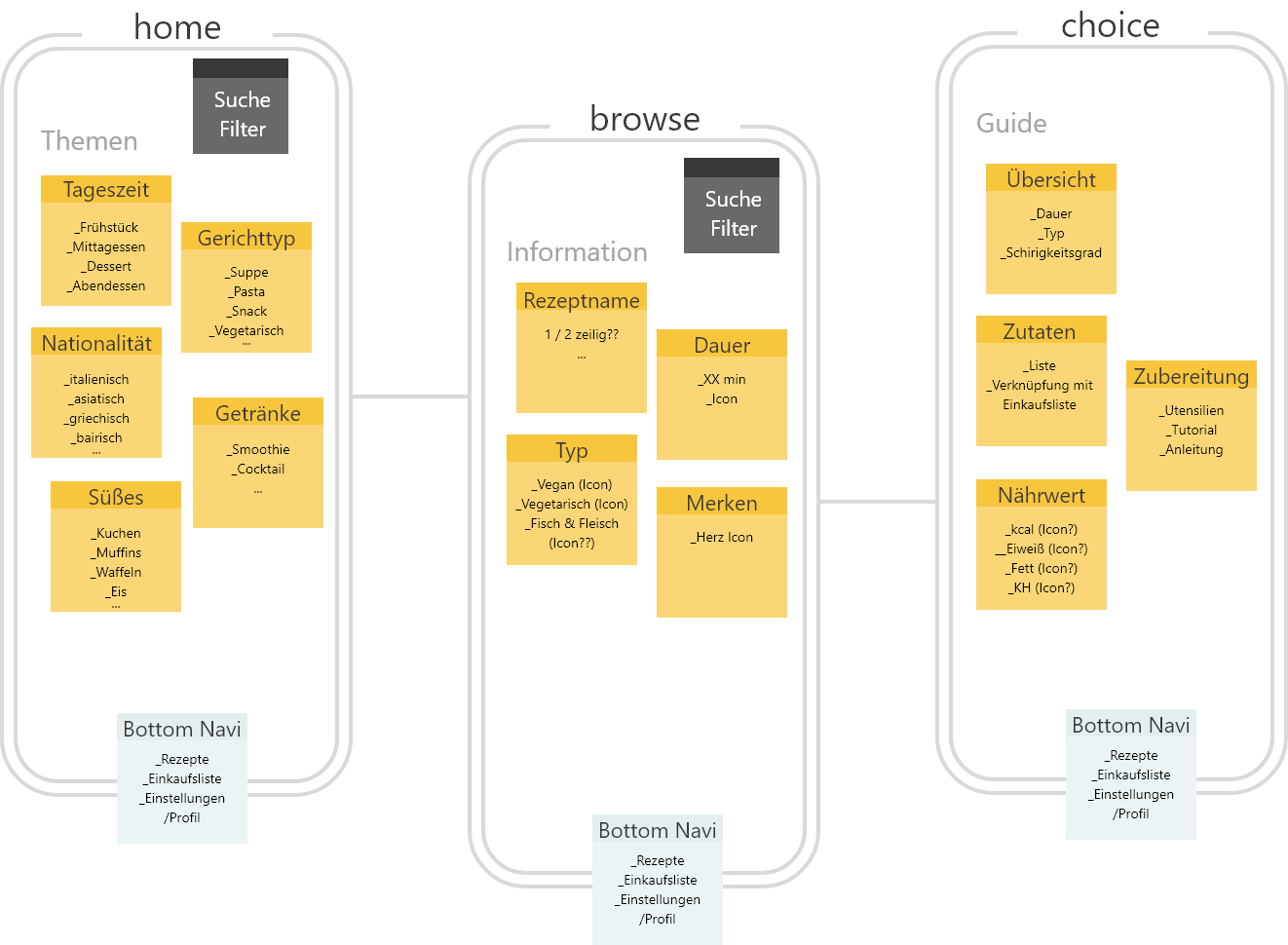
I usually start with text maps where I collect requirements and user needs to assign them to the respective Journey Steps.
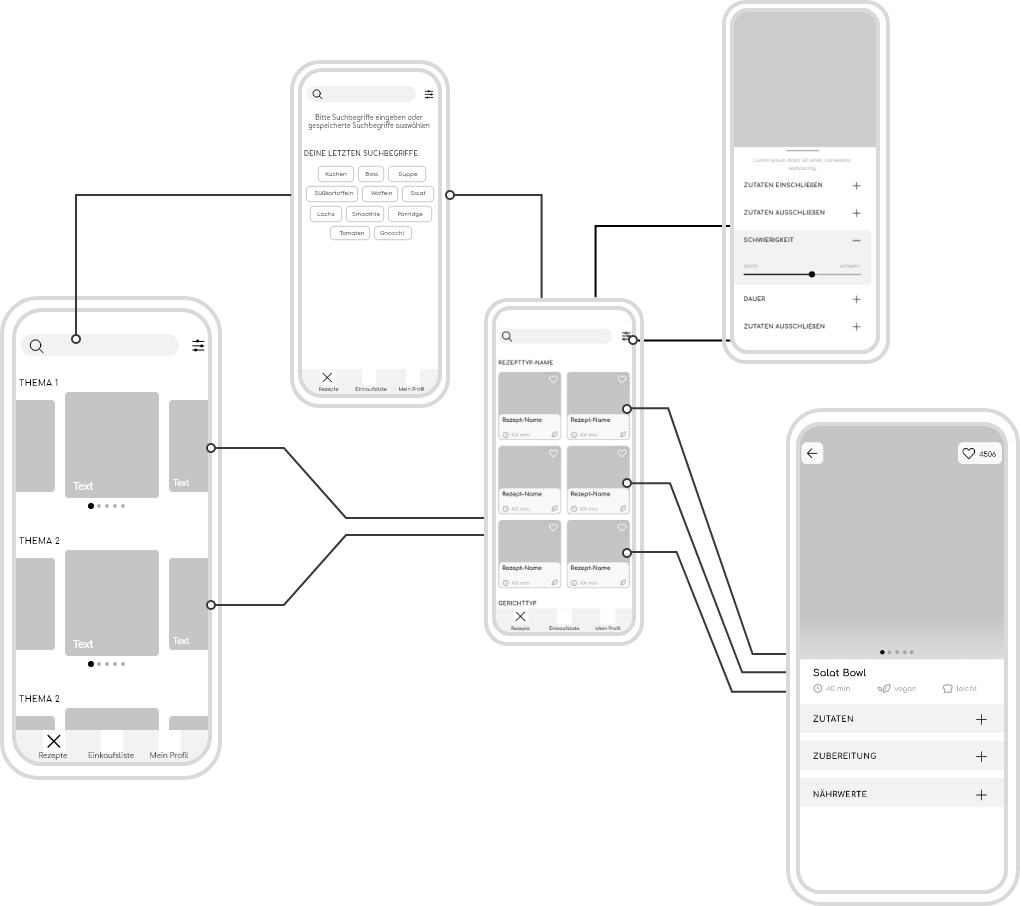
After the basic framework is defined, I move on to creating wireframes, from rough to detailed. For images and icons, I use placeholders first. On the other hand, I try to define the text as early as possible to adequately plan for the space needed in responsive behavior.
Other works
09/2019 - current
This is how I work!
Here you can find more of my design studies and projects.
bachelor thesis
User centered design progress
Empathy through a change of perspective: understanding user needs & responding to them in a targeted precision